Page 17 of 23
PA19.{1-3,5-6} | Lymphadenopathy & Lymphomas — Practice Activities
Interactive Practice Activities
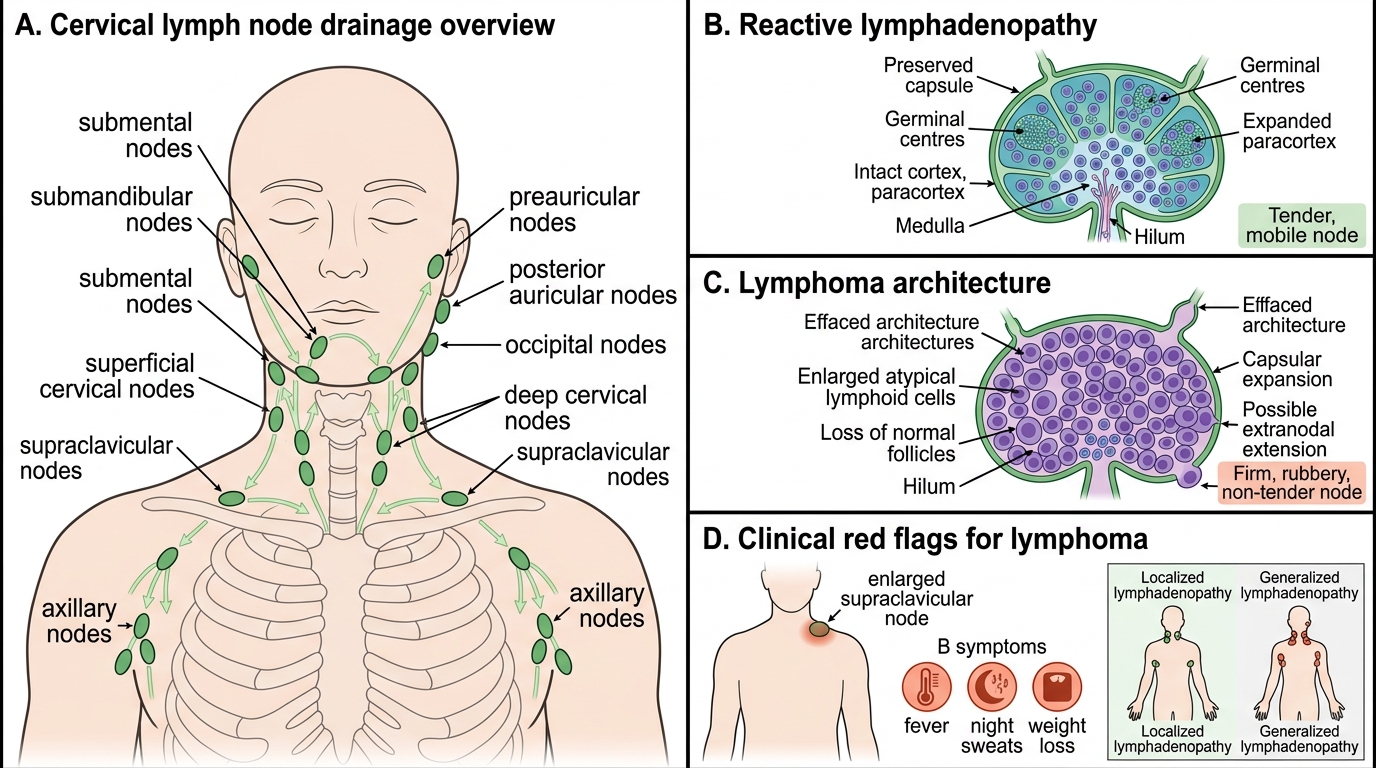
Lymphadenopathy and Lymphoma: Recognition Patterns
Panel A: Anterior head, neck, and upper thorax showing submental nodes, submandibular nodes, preauricular nodes, posterior auricular nodes, occipital nodes, superficial cervical nodes, deep cervical nodes, supraclavicular nodes, axillary nodes, and lymphatic drainage arrows.. Panel B: Reactive lymph node cross-section showing capsule, cortex, enlarged germinal centres, paracortex, medulla, hilum, preserved architecture, and clinical label 'Tender, mobile node'.. Panel C: Lymphoma lymph node cross-section showing effaced architecture, enlarged atypical lymphoid cells, loss of normal follicles, capsular expansion, possible extranodal extension, and clinical label 'Firm, rubbery, non-tender node'.. Panel D: Clinical red flags showing supraclavicular lymphadenopathy, fever, night sweats, weight loss, localized lymphadenopathy, and generalized lymphadenopathy..
Reinforce the key terms and concepts from this module with these self-check activities.
Interactive practice: Crossword
Interactive practice: Flashcards
Interactive practice: Image Hotspots